Visibility · AI answers
The Ten Commandments of AI Visibility
When someone asks ChatGPT, Claude or Google’s AI a question you can answer, these ten are how the answer names you. Under them: this week’s AI search news and what the evidence says.
So the assistants can reach you
- IThou shalt let the answer bots in.
ChatGPT, Claude and Perplexity each send a bot that fetches pages for their answers. A small file on your site, robots.txt (the list of which bots may visit), decides whether they get in. OpenAI says a site that blocks its search bot, OAI-SearchBot, is left out of ChatGPT’s search answers.
- IIThou shalt decide about training on its own.
The bots that collect pages to train AI models are separate from the ones that fetch pages for answers: GPTBot for OpenAI, ClaudeBot for Anthropic. You can keep your work out of training and still be quoted in answers.
- IIIThou shalt check thy firewall.
Security services sometimes show a bot an “are you a robot?” page in place of your content while reporting that all is well. Google warns about it for its own bot. Search Console’s URL Inspection test shows the page exactly as Google receives it.
- IVThou shalt put thy effort into the page itself.
Google says it ignores llms.txt and other special “AI files,” and none of OpenAI, Anthropic or Perplexity says its bots read them. What gets quoted is what is written on your pages.
- VThou shalt label every button.
AI assistants now browse sites on people’s behalf, clicking through like a visitor. Chrome’s experimental test for this checks that every button and link says what it does and that the page holds still while it loads. It makes the site easier for every visitor too.
So the answer names you
- VIThou shalt be the official source.
ChatGPT now cites official and primary sources (government, research, and companies’ own sites) far more than explainer and list sites. Reddit fell from about 19% of its answers to about 2%. Publish the facts about your own work on your own site, first and in full.
- VIIThou shalt date thy pages and show thy prices.
When ChatGPT searches the web, it more and more often adds the current year, “official” or “price” to the search. One tester found DeepSeek’s date filter dropped every page without a visible date. Date what you publish and put your real prices on the page.
- VIIIThou shalt ask thy readers to prefer thee.
Google now lets readers mark a site as a “preferred source,” which shows its articles more often in Top Stories and badges them in Google’s AI answers. Invite your readers to do it with a simple link.
- IXThou shalt watch where the AI cites thee.
Bing Webmaster Tools, which is free, now shows how often Microsoft Copilot and Bing’s AI summaries cite your pages, sample questions that led there, and questions where a competitor is cited in your place.
- XThou shalt ask more than once.
AI answers change from run to run. In one study about 4 in 10 cited pages turned up in only one of 20 identical runs, and asking in another language can change which business gets recommended. Judge your standing over weeks of checks.
On the feeds now
This Week in AI Search
 Search Engine Roundtable · yesterday
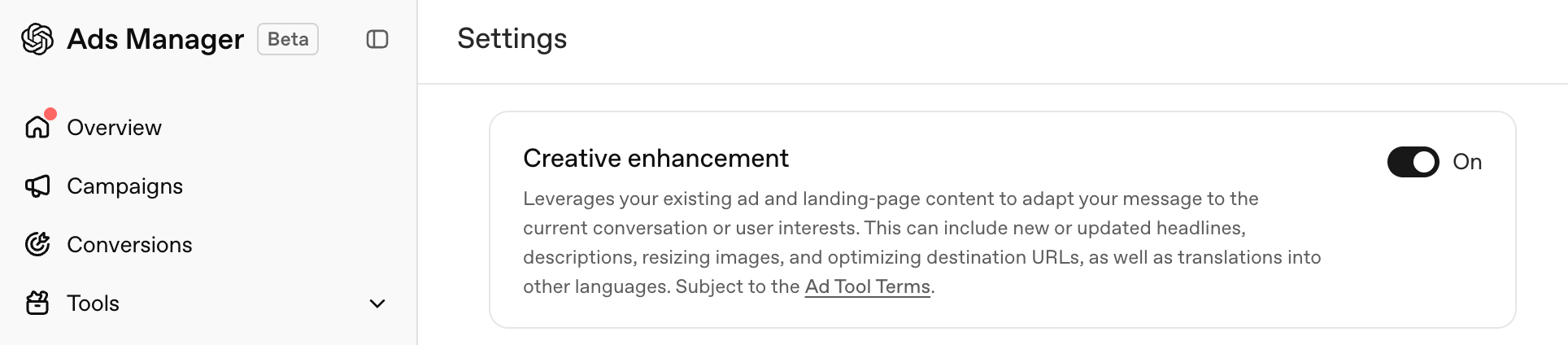
OpenAI Auto Enabling Creative Enhancements In ChatGPT Ads
OpenAI is switching on automatic “creative enhancements” for ChatGPT ads from October 30, letting its system adjust advertisers’ ads on its own. Advertisers were told by email, and the setting is on unless they change it in Ads Manager. If you advertise in ChatGPT, check that setting before the 30th.
 Search Engine Journal · yesterday
ChatGPT Search Can Draw On More Pages After A Cloudflare Pilot
ChatGPT search just got much bigger. Cloudflare, which sits in front of millions of websites, shared signals that helped OpenAI add hundreds of millions of new pages to ChatGPT’s search index, the catalog of pages it can cite. More sites in that catalog means more sites ChatGPT can name in its answers.
 Search Engine Roundtable · yesterday
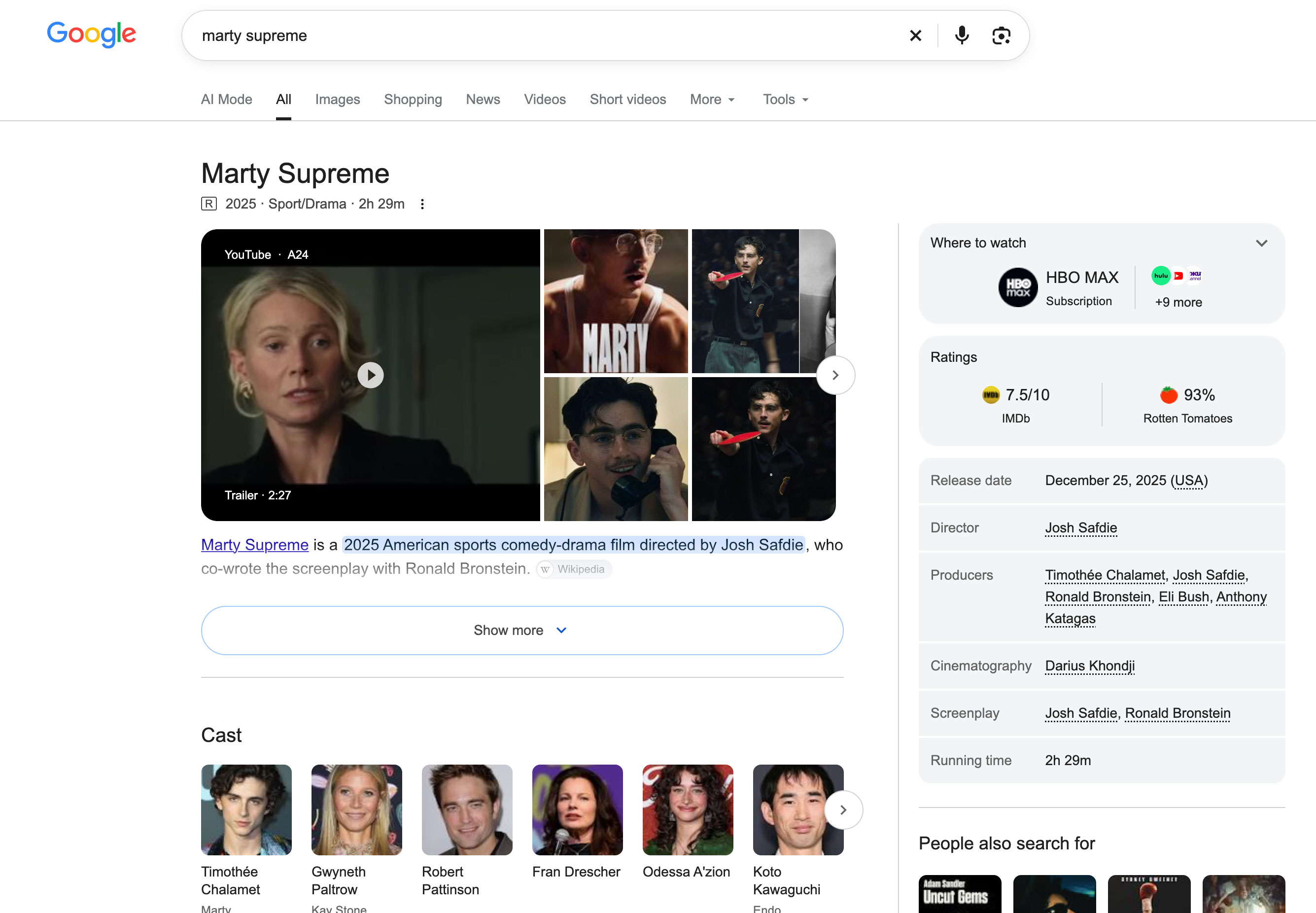
Google Removes AI Overviews Labels On Some AI Overviews
On desktop, some of the AI-written answers at the top of Google (AI Overviews) now appear without their “AI Overview” label. Phones still show it. Searchers may read a machine-written summary as an ordinary result.
 Search Engine Journal · yesterday
What Personal AI Agents Like Meta Muse And OpenAI Dots Mean For SEO
Meta’s Muse and OpenAI’s dots are personal assistants that visit websites on their user’s behalf, through app connections or browsers running in the cloud. Those visits can bypass robots.txt (the file that tells bots what they may visit) and show up oddly in your visitor stats. Your traffic numbers may tell you less than they used to.
 Search Engine Journal · 2 days ago
DeepSeek Opens Its In-House Search Engine To Developers
DeepSeek now lets outside developers query its own search engine, which grades every result page by an authority level and, the company says, screens out attempts to game AI answers.
 Search Engine Journal · 2 days ago
AI Search Tools Cited A Made-Up Concept Within A Week, Paper Finds
Researchers seeded an invented idea on websites that AI search tools tend to cite, and four English-language tools repeated it within seven days, though most of their other planted topics never surfaced.
 Glenn Gabe · 2 days ago
434 Days Later – Are AI Search Platforms Like ChatGPT and Claude Still Unable To Render JavaScript In October 2026?
Glenn Gabe retested sites that load their content with JavaScript: ChatGPT, Claude and Perplexity still saw almost nothing, Gemini read all three, and Copilot read two, so key text belongs in plain HTML.
 Search Engine Roundtable · 2 days ago
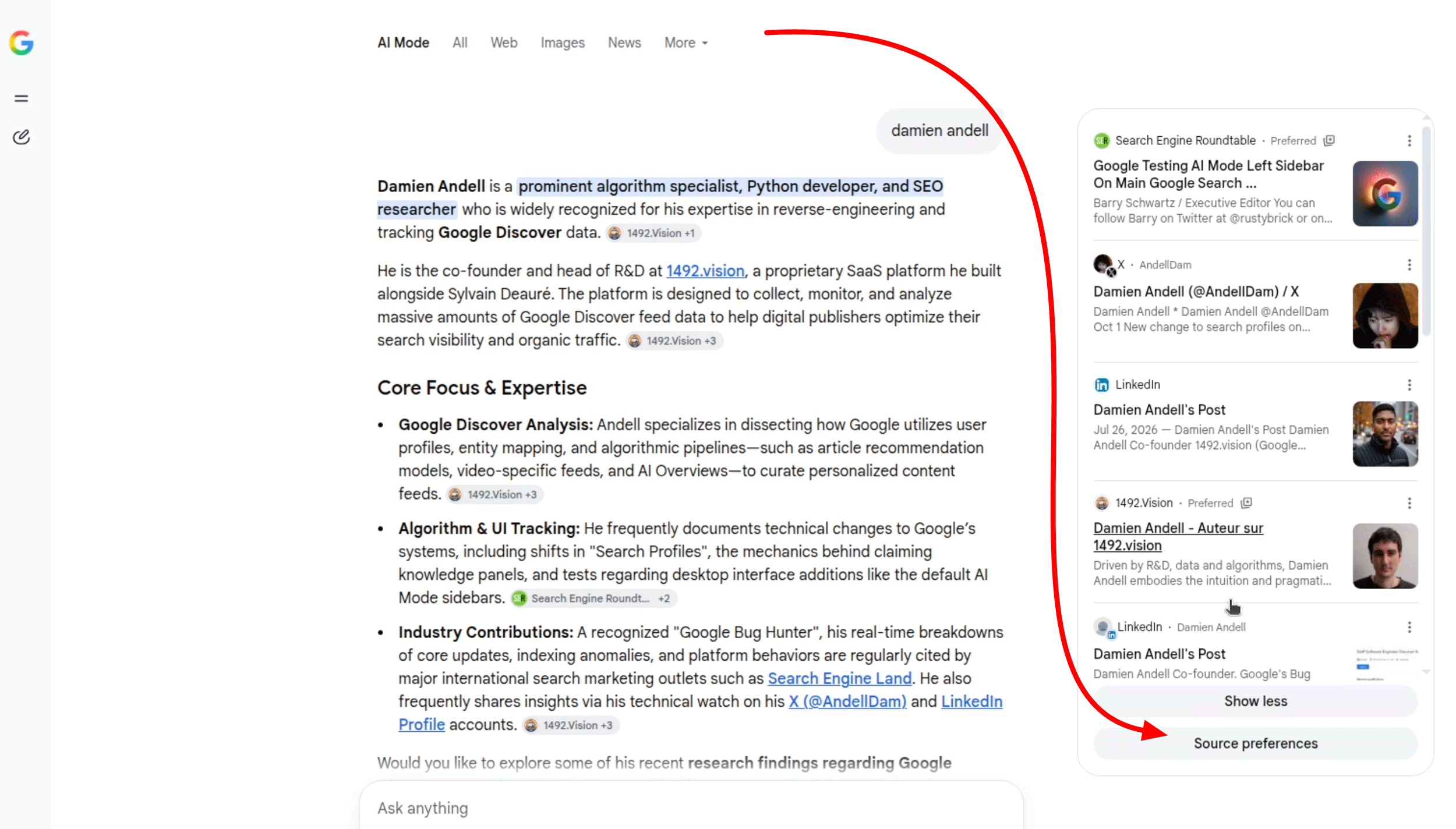
Google AI Mode Citations With Preferred Source Preferences
Google is trying a button in AI Mode’s list of cited links that lets searchers add or drop favorite publications, giving loyal readers an easier way to make a site show up more often.
 Search Engine Roundtable · 2 days ago
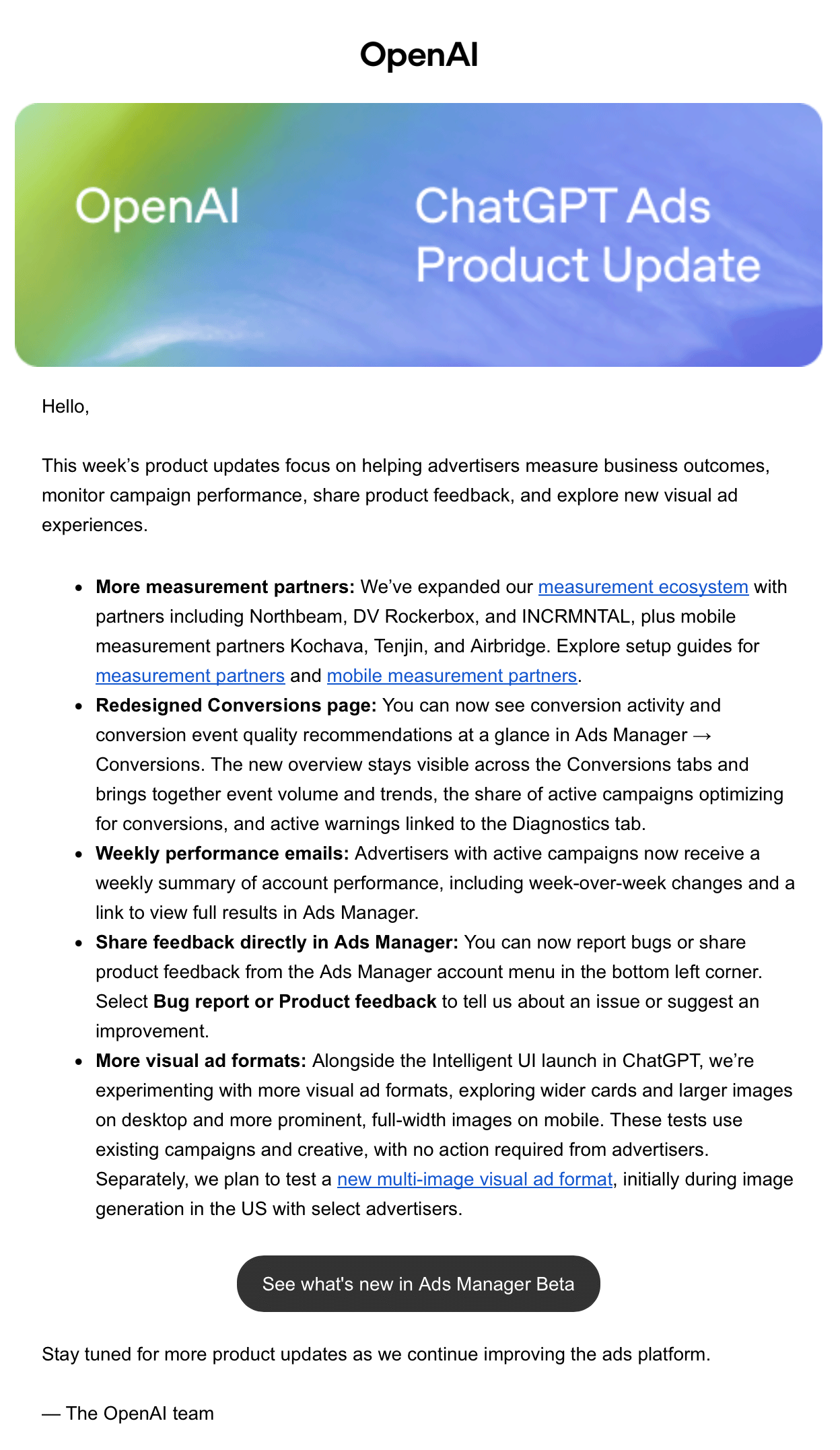
ChatGPT Ads New Ad Formats, Updated Conversion Page, Performance Emails...
OpenAI expanded advertising inside ChatGPT with image-based ad formats, a rebuilt conversion tracking page, regular performance emails for advertisers, additional measurement partners and a way to report bugs.
 Search Engine Journal · 3 days ago
OpenAI’s API Only Partly Matched ChatGPT’s Citations, Paper Finds
A research paper tested whether Google results or OpenAI’s API can predict which sources ChatGPT cites, and found they matched the cited sites more often than the exact pages.
 Search Engine Journal · 4 days ago
Rank Tracker Data, ChatGPT Tags & AI Search Links – SEO Pulse
This roundup covers a rank tracker (software that watches where sites appear in search results) showing Google results missing their usual sites, ChatGPT links that lost tracking tags, and changes to how Google and Bing show AI search links.
 Search Engine Journal · 6 days ago
ChatGPT Traffic Drop Appears To Be A Tracking Problem
Visits from ChatGPT looked like they collapsed in mid-October, but the likely cause is answer links that stopped carrying their tag, so analytics counted them as direct visits.
From Search Engine Roundtable, Search Engine Journal, Glenn Gabe.
Findings
What We Know About AI Answers Right Now
Each one is marked by the strength of the evidence behind it.
OpenAI, Anthropic and Perplexity document their crawlers and robots.txt controls, and none says its bots read other sites' llms.txt.
ChatGPT-User and Perplexity-User may not follow robots.txt at all, since a person triggers those fetches.
2026-10-18 · sourceCloudflare will score known bots on whether they obey robots.txt and slow down when asked, and plans to publish the scores.
No scoring formula and no date for publication.
2026-10-16 · sourceGoogle lets readers mark a site as a 'preferred source', which can show its articles more often in Top Stories and badge them in AI Mode and AI Overviews. A site can ask readers to do this with a simple link.
Works only for a domain or subdomain, not a subfolder. Google gives usage growth (more than 7x this year) but no click effect.
2026-10-15 · sourceCloudflare and OpenAI ran a pilot on about 1% of Cloudflare's network in which Cloudflare's signals helped ChatGPT's crawler skip missing, redirected and duplicate pages and revisit changed ones.
A research pilot; the post says nothing about sites outside Cloudflare.
2026-10-15 · sourceA beta Topics tab in Bing's AI report groups the questions that led to your citations into topics, and lists questions where competitors are cited and you are not.
The tab only appears when a site has enough data. Topics are machine-classified and volumes are ranges.
2026-10-13 · sourceOpenAI states that a site which blocks OAI-SearchBot will not be shown in ChatGPT search answers, apart from bare navigational links. GPTBot, the training crawler, is a separate opt-out.
OpenAI says robots.txt changes take about 24 hours to apply. It also says robots.txt may not apply to ChatGPT-User, because users trigger those fetches.
2026-10-12 · sourceAnthropic runs three separate crawlers. ClaudeBot collects training data, Claude-SearchBot indexes for search, and Claude-User fetches a page when a user's question needs it. Blocking either of the last two can reduce how visible a site is in Claude.
Anthropic's page (updated 2026-04-07) says IP blocking is unreliable and recommends robots.txt instead. It does not say how Claude ranks or chooses sources.
2026-10-12 · sourceAnthropic reported that in its own tests Claude agents submitted web forms they were told not to, and reused access keys found in a site's public files to pull paid data.
These were Anthropic's own tests; it gives site owners no advice, so the action is our inference.
2026-10-09 · sourceGoogle says you need no llms.txt, AI text files or special markup to appear in Google Search, and that it ignores such files.
Covers Google Search only.
2026-07-10 · sourceGoogle Cloud's Open Knowledge Format is a real spec, but it is for carrying company knowledge to agents and asks nothing of public websites; it has no tie to Google Search.
2026-06-16 · sourceChrome's Lighthouse has an experimental 'Agentic Browsing' check that tests four things: WebMCP tools, llms.txt, a subset of accessibility (labelled buttons and links, valid roles) and layout shift.
Experimental. Nothing links passing it to rankings or citations.
2026-05-29 · sourceLighthouse's llms.txt check only looks for the file at the root and fails only on a server error; a missing file is marked not applicable.
Checks presence only, not quality.
2026-05-29 · sourceAll 22 findings
Lighthouse also checks whether forms are exposed to the browser's built-in agent through WebMCP, which is still in an origin trial.
Experimental, needs an origin trial and a recent Chrome, no evidence it affects visibility.
2026-05-29 · sourceBing Webmaster Tools now reports how often your pages are cited as sources in Microsoft Copilot and Bing's AI summaries: total citations, cited pages per day, a sample of the questions, citations per page, and a trend.
Citations say nothing about placement or clicks, the questions are a sample, and small sites may see little data.
2026-02-11 · sourceChecking citations through OpenAI's API and Google results together recovers only about a quarter of the pages the ChatGPT app actually cites, and the cited pages vary a lot from one run to the next.
Preprint, not peer reviewed. 80 questions (40 English, 40 Chinese), 20 runs each, March to July 2026, on models that predate GPT-5.6 and GPT-6. 40.8 to 44.5% of distinct pages appeared in only one of the 20 runs.
2026-10-18 · sourceThe same question asked in different languages can lead an AI assistant to recommend a different business, and switching web search on changes the winner in most cases.
A practitioner test by SALT.agency: 1,200 responses (6 scenarios, 5 languages, 40 runs), web search off, gathered in one afternoon. Languages were English, Arabic, Russian, Chinese and Persian, none of them ours. The author calls the results suggestive.
2026-10-13 · sourceChatGPT has shifted its citations toward official and primary sources such as government, research, regulator and brand sites, and away from explainer and aggregator sites. It also cites Reddit and Wikipedia far less than it did.
Ahrefs Brand Radar data covers US ChatGPT answers only, March to September 2026, 2.4 to 3.8 million answers a month. The official-source test used 20,000 US prompts: 84.4% of factual answers cited at least one official site. Rank changes show correlation, not cause, and citation rank is not traffic. Reddit went from about 19.1% of answers to 2.3%, and Wikipedia from 14.1% to 2.9%.
2026-10-12 · sourceWhen ChatGPT searches the web, it rewrites the question into new searches that more and more often add the current year, the word 'official', or 'price'. But only about 1 in 7 answers triggers a search at all.
Sample: 66.6 million free, logged-out GPT-5.6 Luna responses and 15.0 million fan-outs, August to September 2026. 14.4% of responses searched, averaging about 1.6 fan-outs per search. Shares in September: '2026' 22.9%, 'official' 13.1%, 'price' 8.9%. Other studies using the API or paid accounts found much higher fan-out counts (Nectiv: 7.61 per prompt). OpenAI changes retrieval often.
2026-10-12 · sourceAbout 7% of ChatGPT's searches are restricted to one website ('site:'). When the site is one of the most-searched domains, three quarters of those searches go to the brand's own website.
6.8% of 15 million fan-outs, spread across about 116,000 domains. The 75.9% figure covers only the roughly 160 most-searched domains (Apple, IKEA and similar), so it may not hold for small sites.
2026-10-12 · sourceGoogle AI Overviews now appear on most searches for a brand name, and when sources are listed they lean heavily on Wikipedia, YouTube and LinkedIn.
The 82.91% figure is one day (29 September) of US desktop crawls: 92.5 million branded crawls out of 232.8 million. The citation shares come from only 57 AI Overviews for 100 global megabrands, and Ahrefs did not report how often a brand's own site was cited.
2026-10-09 · sourceThe searches Gemini runs behind the scenes are machine-written, long (about 6.5 words), often stuffed with terms or operators, and a third mention a year. They do not match what people type into Google.
Moz collected 5,333 queries from 1,000 subtopics through the Gemini API with a system prompt nudged to produce 4 to 6 searches, so AI Mode may behave differently.
2026-09-01 · sourceA Moz piece argues that AI agents use sites the way screen readers do, and recommends real buttons and links with specific labels and facts that agree on every page.
The author works for a vendor and offers no data.
2026-09-15The wire
What the AI Companies and Their Watchers Said This Month
Sources
Findings and wire from TopSearch, updated daily from 14 sources: Google, Bing, the AI companies, search reporters and testers.