Department 03
The Exhibits
Eleven winners, shown and explained. Ordered by what each one proves — starting with the site that took the top prize on the web, and ending with the ones that won without any of the technology everyone assumes is required.
Messenger
Awwwards Site of the Year 2025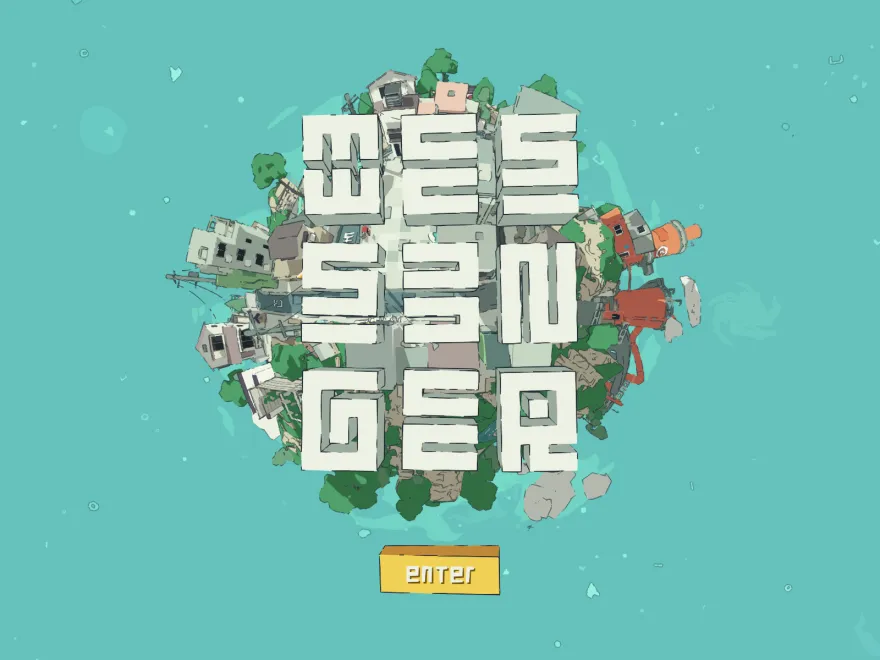
The highest honor on the web went to something that is barely a website. Messenger is a miniature planet rendered in WebGL, spinning in real time, with a delivery character who has to navigate its compact geography. Physics, lighting and animation are GPU-rendered at a standard that belongs to console games.
Note the WebSockets tag — this is a shared world, not a solo toy. It is worth sitting with how far this is from a commercial brief. No client asked for a tiny planet with a courier on it.
Creativity is only 20% of the Awwwards weighting, but a genuinely novel object clears the other three criteria almost incidentally: it is well-designed because it was art-directed as a world, usable because it has one verb, and its content is the experience.
IVRESS — Spin a Tale
Utsubo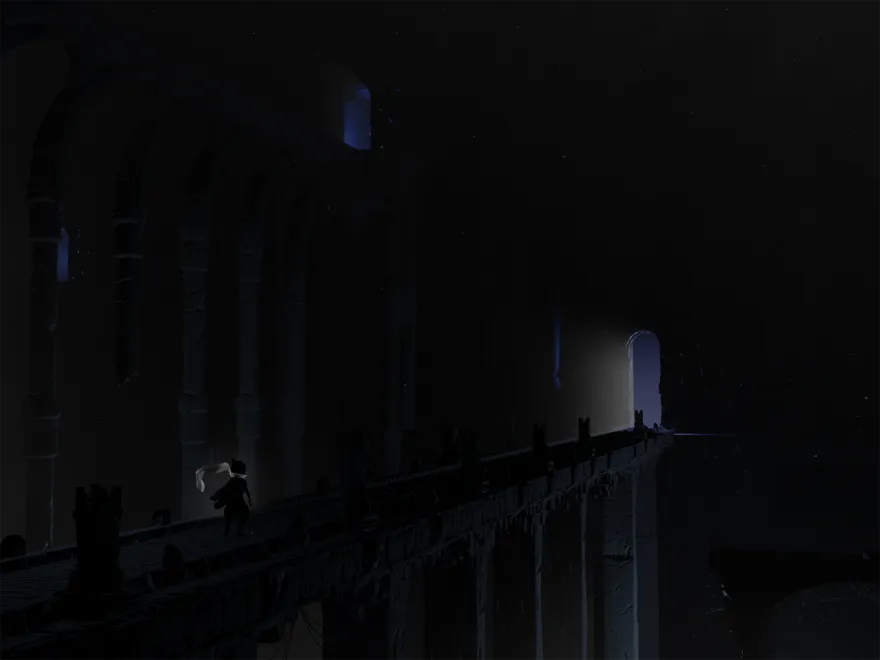
The most technically significant file here. IVRESS ships Three.js's WebGPURenderer with a WebGL fallback, and the shaders are written once in TSL — Three.js Shading Language — compiling to both backends. No forked codebase, no maintaining two shader sets.
That is the migration path the field has been waiting for. WebGPU's performance ceiling has been available for a while; what was missing was a way to adopt it without abandoning browsers that don't have it.
If TSL adoption holds, expect the next twelve months of award-winning 3D to get materially heavier — compute shaders and particle counts WebGL could not sustain.
Spotify Wrapped Party
Active Theory · Site of the Day, 24 July 2026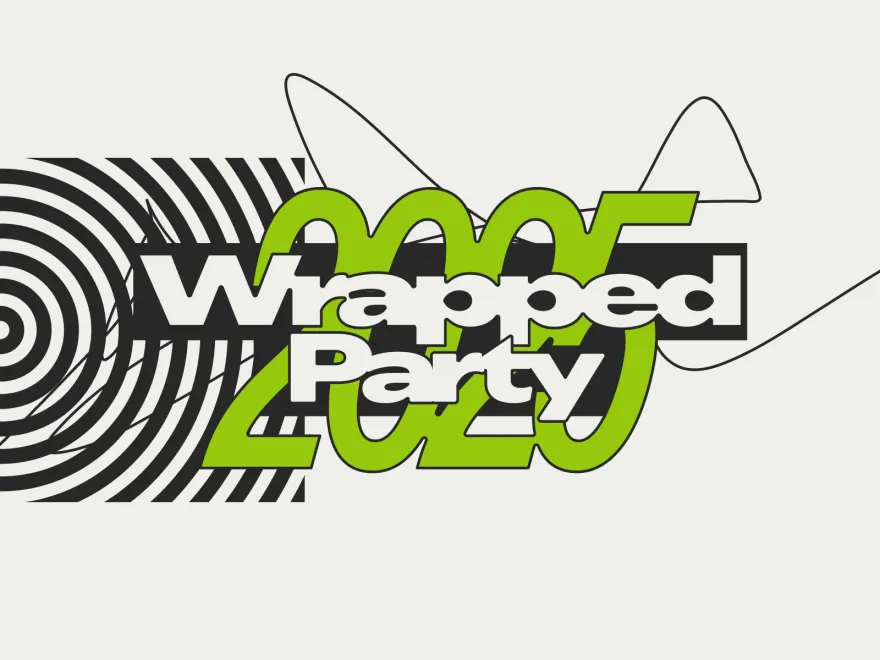
The rarest thing in this department: award-tier interactive craft operating at genuine consumer scale. Active Theory built full WebGL with GSAP choreography, a data-visualisation layer and real audio — for a campaign with an audience in the hundreds of millions.
The Firebase tag is the tell. This is not a showcase piece; it is a live product with a backend, shipped under load, and it still cleared the developer bar.
Lacoste — Polo Factory
Merci Michel · Site of the Day, 21 July 2026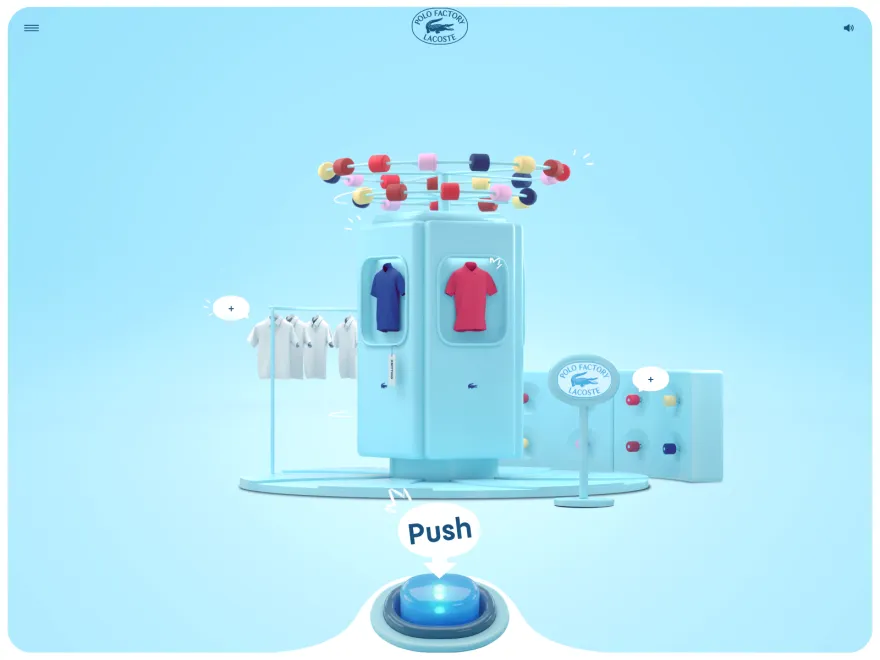
A brand world you operate rather than read: Three.js, fullscreen, colour-saturated, built around a mechanic. Lacoste has run more than one award-tier interactive build in this period — their Ace Breaker is a tightly scoped playable game in the browser, one verb, instantly readable, with a leaderboard and real-world stakes attached.
The discipline is in the scoping. One mechanic done completely beats a suite of mini-games, and a brand commissioning two of these in a season is running a media strategy, not a campaign.
PP Neue Montreal
Demande Spéciale · Site of the Day, 13 July 2026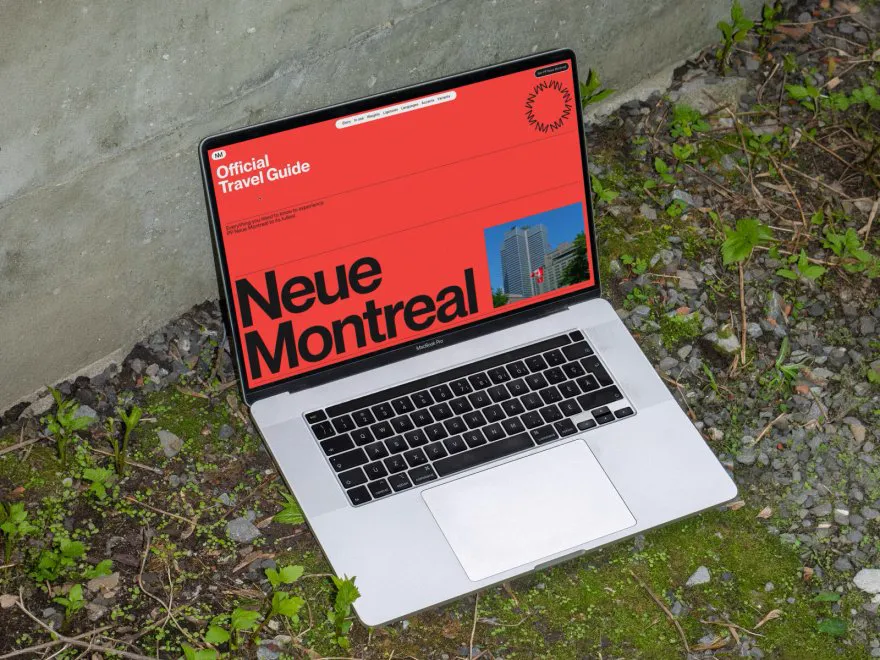
A font specimen site won a day against a field of WebGL. No 3D tag, no Three.js, no shaders — the tags are typography, motion, experimental, and Framer. The product is shown at every size, in use, interactively, and that is the entire site.
The specimen format has quietly become the template for launching any digital product: show the thing itself, huge, doing what it does. It also carries a Developer Award, which is a useful corrective — the engineering honor is not a graphics honor.
Dragonfly Redux
Studio Freight · Site of the Day, 22 July 2026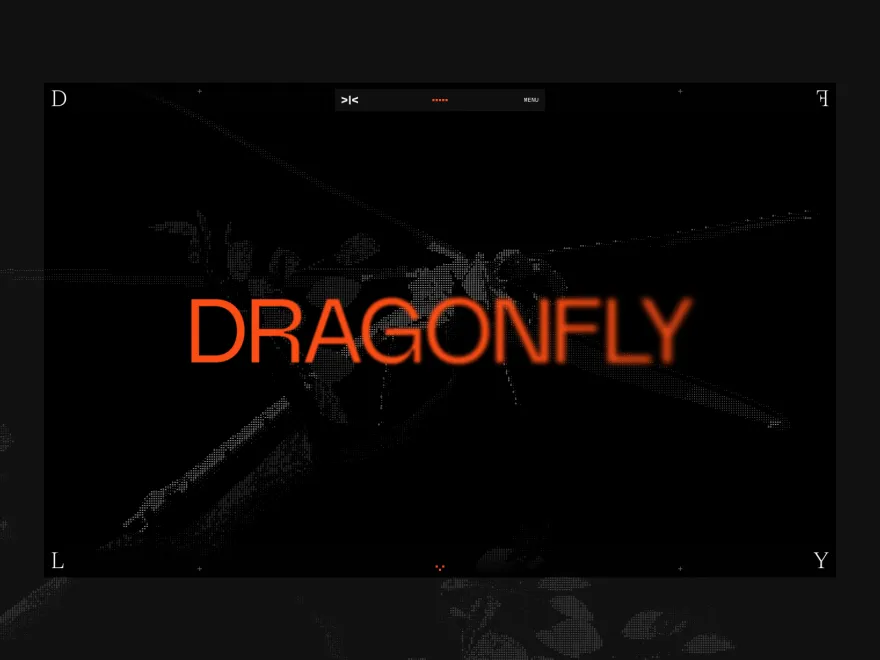
Studio Freight wrote Lenis, the smooth-scroll library running underneath a large share of the sites in this issue. Here they are winning a day with their own client work — WebGL, 3D, GSAP, on Vue.
Their unusual position in the field is that their open-source tooling has probably shaped more winning sites than their own portfolio has. Very few studios influence the competition's baseline feel and then also beat it.
House of Honey
Edoardo Lunardi · Site of the Day, 14 July 2026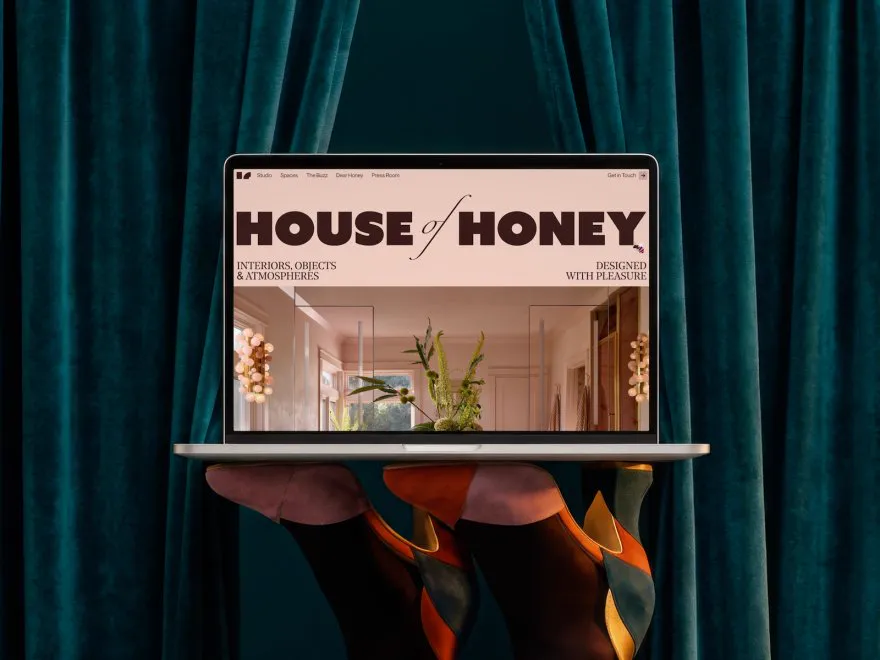
Minimal, typographic, luxury — and a Developer Award. The tag list is the argument: typography, copy design, interaction design, microinteractions, motion, Next.js, Sanity. Not one graphics tag anywhere.
The same pattern is visible elsewhere this cycle: the UK studio By-Kin took an Awwwards Site of the Day, its Developer Award, an FWA and a CSSDA Web of the Day in a single run, on Next.js, GSAP and a CMS — described as a masterclass in restraint. Four awards, three juries, no WebGL.
Bruno Simon Portfolio
Site of the Year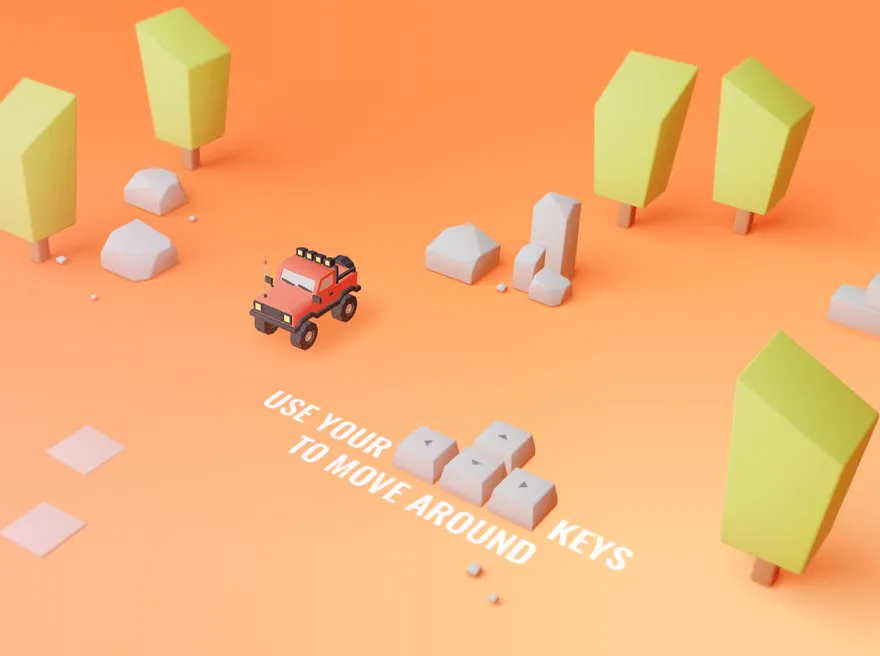
A personal portfolio you drive around in a car. It took the top prize on the web, and it is probably the single most imitated site in this canon — a generation of developers learned Three.js because of it.
It belongs in any serious case file for a structural reason: it proves the top prize is reachable by one person. Nothing else on the Site of the Year list needed less budget.
Active Theory v4
Active Theory
A studio's own website winning the industry's top annual prize — with custom GLSL, Three.js and full WebGL. Four of the thirty-one Sites of the Year are studio portfolios, which is a fact with no equivalent in other design disciplines.
Active Theory remain active at the top: they took a day this month for the Spotify build (EXHIBIT 03), seventeen years into the format.
Pangram Pangram Foundry
Site of the Year
A type foundry that won the top prize on typography, content architecture, Shopify and Locomotive Scroll. No WebGL, no Three.js, no 3D tag of any kind — in a canon where twenty-five of thirty-one winners have one.
Keep this file next to EXHIBIT 01. Messenger and Pangram Pangram won the same award by opposite means, which is the strongest available evidence that the jury is scoring conviction rather than technique.
21 Hrs On The Moon
Culture & Education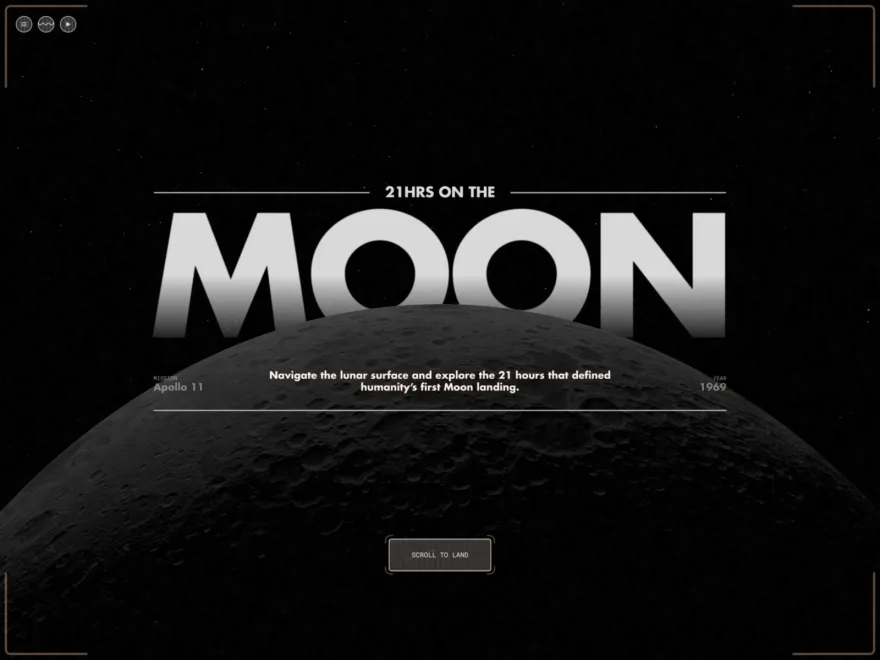
WebGL, photography, storytelling — and Sound-Audio, the rarest tag in the set. Only a handful of winners this cycle carry it, and audio is disproportionately effective at producing the sense of a place.
Immersive Garden's Cartier Watches & Wonders build runs the same play at luxury scale: six self-contained 3D rooms, each lit and loaded independently, with a Web Audio score as a narrative layer rather than ambience — and scroll navigating between rooms instead of down a page.
Screenshots: Awwwards submission thumbnails, shown for review. Each links to its entry. Tags as classified by the award body.
Also on file
Four Without Pictures
Award winners covered in this issue's research whose thumbnails we did not reproduce. The technique notes stand on their own.
Oryzo — Lusion
One hero object, rendered live, with real weight and inertia — easing tuned to mimic physics rather than to look smooth. Scroll moves the camera through true Z-axis depth instead of sliding 2D layers. Most failed 3D sites fail by adding objects rather than by improving one.
Iventions
A Three.js scene that treats each project as a spotlit installation, GSAP pacing the reveals. WebGL used for atmosphere instead of spectacle — the 3D is doing lighting design. The company designs physical events and spaces, so the rendering approach is a direct translation of its actual craft.
Mat Voyce
Letters stretch, snap and recombine on scroll, on GSAP timelines, tuned so motion never obstructs reading. The portfolio of a kinetic type artist that performs the discipline it is selling.
Uncommon Studio
Built on a grid and winning on rhythm: confident grid breaks, and transitions between sections that behave like camera moves rather than page changes, without losing performance. Three awards for a site whose primary material is layout.
Pattern
What the Files Have in Common
One idea, executed completely. Oryzo's single object, Ace Breaker's single verb, Messenger's single planet, PP Neue Montreal's single typeface. None of the winning work is a collection of effects; all of it is one commitment pursued to the end.
The technique matches the subject. Iventions designs installations and renders projects as spotlit installations. Mat Voyce animates type and animates type. Cartier sells objects you inspect in rooms, so the site is rooms. Where technique is arbitrary, the jury reads decoration.
Restraint is not disqualifying. House of Honey and By-Kin took Developer Awards with no graphics tags at all; Pangram Pangram took the top prize on typography. The floor is craft. 3D is one way over it, not the toll.
Nearly every file here holds a Developer Award. Engineering is the entry fee now.